Forty Minutes Late and Judged Anyway: Surviving the Waiting Room When Your Disability Is Invisible
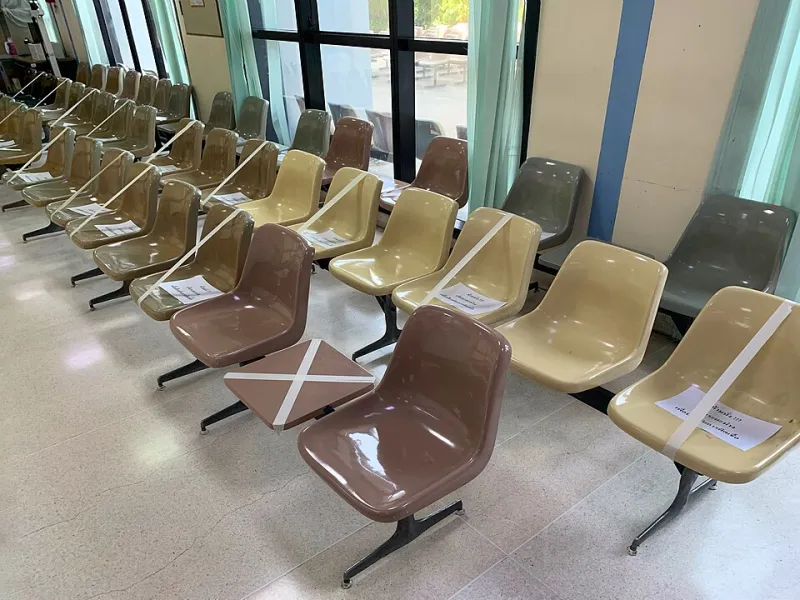
Photo: Chainwit., CC BY-SA 4.0, via Wikimedia Commons
The waiting room at your average American clinic is a masterclass in unintentional cruelty. There's the sign-in sheet that assumes you can stand at the counter. The TV mounted in the corner playing daytime news at full volume. The chairs arranged in rows with all the ergonomic comfort of a church pew. And then there's the thing nobody talks about: the quiet performance of being believed.
If your disability came with a cast or a wheelchair, waiting rooms tend to make room for you. But if what you're managing is dysautonomia, chronic migraines, a panic disorder, or pain that flares without warning, the room itself becomes a second appointment — one where strangers evaluate whether you look sick enough to be there.
The Side-Eye Economy
Here's how it usually goes. You parked in an accessible spot because walking the full lot would cost you the rest of the day. Someone coming in behind you clocks it, sighs audibly, or — the classic — looks you up and down. By the time you reach the front desk, you've already spent energy you were saving for the actual appointment.
Then the wait starts. Twenty minutes becomes fifty. For someone with POTS or ME/CFS, standing to ask about the delay isn't just annoying; it can trigger symptoms that derail the whole visit. For someone with anxiety or autism, the sensory load of fluorescent lights, overlapping conversations, and a blaring TV isn't background noise — it's an active assault.
And because your struggle doesn't show, nobody adjusts. You're just the person who checked her phone the whole time, or the guy who seemed fine until he asked for a chair to be brought closer.
Why Waiting Hits Harder for Us
Waiting is never neutral. It's a tax on limited energy, and people with hidden disabilities pay it at a punishing exchange rate. A neurotypical patient with a healthy body spends an hour in a waiting room and walks out the same person. You might walk out unable to function for two days.
There's also the credibility problem. Visible conditions get sympathy for waiting. Invisible ones get suspicion. Sit down too quickly and you're dramatic. Mention your symptoms to the receptionist and you're difficult. Say nothing and suffer quietly, which is exactly what most of us have learned to do.
Your Waiting Room Toolkit
You can't fix the system overnight, but you can walk in better armored:
- Call ahead. Many clinics will let you wait in your car and text you when the provider is ready. Ask. This single accommodation can save an entire day's worth of energy.
- Bring your documentation energy down a notch. You do not owe anyone an explanation of your condition — not the person sighing behind you, not the receptionist. "I have a medical accommodation" is a complete sentence.
- Pack for the environment. Sunglasses for the fluorescents, noise-canceling earbuds, a portable fan, electrolyte drink, medication you might need if the wait runs long. This isn't being high-maintenance; it's being prepared.
- Use the ADA. Under the Americans with Disabilities Act, medical facilities are required to provide reasonable accommodations. A chair near the door, a quieter space, a shorter wait in the car — these are requests you're entitled to make.
- Decompress after. Schedule nothing else on appointment days if you can. Recovery time isn't laziness; it's part of the treatment.
When the Front Desk Becomes the Problem
Sometimes the hardest part isn't the wait — it's the person running it. If a staff member dismisses an accommodation request or publicly questions your need for one, you're allowed to escalate. Ask for the practice manager. File feedback with the office. In repeated or serious cases, the Department of Justice handles ADA complaints, and state protection advocacy organizations (find yours through the National Disability Rights Network) can help.
Document what happened: date, time, what was said. Not because every incident becomes a case, but because patterns matter — and because writing it down reminds you that you didn't imagine it.
Reclaiming the Wait
Here's the reframe worth sitting with: the waiting room doesn't get to define how visible your disability is. You know what you're managing. Your care team (hopefully) knows. The strangers in row three do not need to be convinced, and their doubt has no medical authority.
Every time you ask for the accommodation instead of white-knuckling through, you're not being difficult. You're practicing the exact self-advocacy your health depends on. And honestly? The more of us who ask — calmly, without apology — the more normal it becomes for the next person signing in at that same desk.
Waiting rooms may not change tomorrow. But you can walk in with earbuds in, a chair claim staked, and your dignity intact. That's not a small win. That's the whole game.