Labeled Lazy, Punished for Panic: The School System's Blind Spot
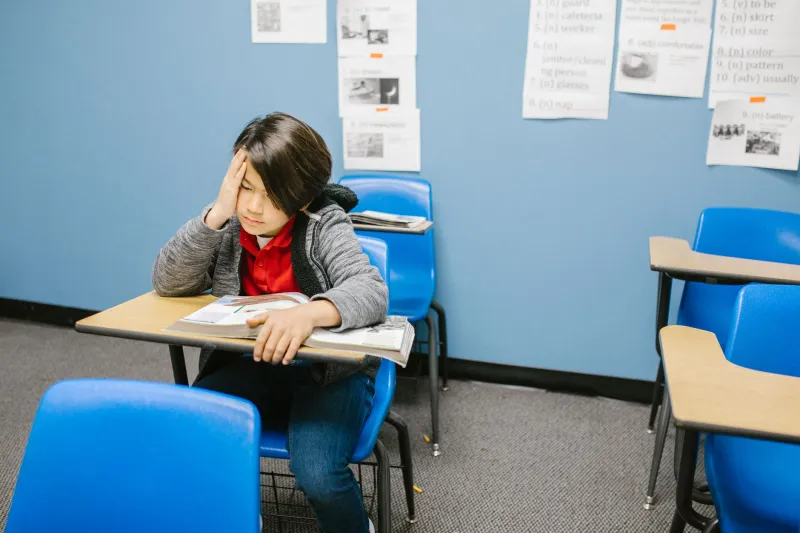
The note came home on a Tuesday: Marcus has been refusing to complete his work again. Please speak with him about effort.
What the teacher didn't know — because nobody had told her, because the school's paperwork had gotten lost twice — was that Marcus has dysautonomia. Some mornings, standing in line for homeroom makes his vision go gray. By third period, the fatigue isn't laziness. It's his body running on empty.
Stories like Marcus's play out in classrooms across the country every single semester. And they reveal something uncomfortable about American education: our systems are built to recognize disabilities we can see, and to punish the ones we can't.
The Visibility Problem in the Classroom
Special education in the US is anchored by the Individuals with Disabilities Education Act (IDEA), a law that's genuinely powerful on paper. Students who qualify get an Individualized Education Program — an IEP — that legally obligates the school to accommodate their needs. There's also the 504 plan, a more flexible option under Section 504 of the Rehabilitation Act.
But laws don't apply themselves. They get applied by teachers with thirty kids in a room, administrators juggling budgets, and evaluation backlogs that can stretch months. And when a student's disability is fatigue, chronic pain, POTS, ADHD, anxiety, autism without intellectual disability, or a learning difference that masks as carelessness, the default institutional response is often skepticism.
A kid who can ace a test on a good day but can't get out of bed on a bad one gets flagged as inconsistent. A student whose panic response looks like defiance gets a discipline referral. A teen with brain fog from long COVID gets a participation grade that quietly tanks their GPA.
The disability isn't invisible to the kid. It's invisible to the rubric.
"They Thought I Was Just Difficult"
Ask adults with hidden disabilities about their school years and the same phrase surfaces again and again: nobody believed me.
One parent I spoke with — a nurse in Ohio whose daughter has juvenile fibromyalgia — described three years of meetings before the district agreed to a 504 plan. "We brought letters from two specialists. They still suggested she 'build stamina.' She was eleven."
Special education advocates describe a pattern: schools treating hidden disabilities as a family opinion rather than a medical reality. Some districts push back on evaluations, hoping parents will exhaust themselves into giving up. Others comply minimally — a plan exists on paper, but the substitute teacher never sees it, or the accommodation for extended deadlines quietly becomes "the kid has to ask every time, in front of everyone."
And the students themselves often learn the worst lesson of all: that asking for help marks you as a problem. Plenty of them stop asking.
Why the System Drifts This Way
It's tempting to blame individual teachers, but most are doing their best with training that never covered this. General education certification programs might spend a few hours on disability law. Chronic illness? Rarely. Anxiety presentations in neurodivergent kids? Rarely.
Meanwhile, the incentives run the wrong direction. Evaluations cost districts money. Accommodations cost staff time. Discipline data is easy to measure; a kid quietly white-knuckling through a flare day doesn't show up on any dashboard.
None of this excuses the failures. But it explains why fixing them requires more than good intentions — it requires parents and advocates who know how the machinery works.
Your Back-to-School Checklist
If you're heading into an IEP or 504 meeting this year, walk in prepared:
1. Get it in writing — all of it. Verbal agreements evaporate by October. Request that every accommodation, evaluation decision, and denial be documented, and get copies.
2. Put your request to evaluate in writing. Under Child Find, a written referral starts a legal clock. Email beats phone calls. Keep the timestamp.
3. Bring outside documentation. A letter from a treating physician or psychologist carries more weight than a parent's description, fair or not. If waitlists are long, ask the school to proceed with evaluation anyway — they can't legally delay just because your specialist is booked out.
4. Ask for accommodations that don't out your kid. Prefer options like a standing pass to the nurse, deadline flexibility built into the plan itself, or a private signal for breaks — things that don't require a classroom announcement.
5. Include a substitute protocol. The best 504 plan in the district is useless if a sub never sees it. Ask how accommodations follow the student, not the teacher.
6. Know your escalation path. You can request an independent educational evaluation at public expense, file a state complaint, or pursue due process. Advocacy organizations in most states offer free or low-cost support — look for your state's federally funded Parent Training and Information Center.
7. Bring your kid's voice. A short statement from the student, in their own words, about what a hard day actually feels like, is often the most persuasive document in the room.
The Ability Hiding in Plain Sight
Here's what gets lost in all the paperwork battles: these kids are often extraordinary problem-solvers. Students managing chronic illness learn time management, self-advocacy, and resilience that most adults haven't mastered. That's not a consolation prize — it's a real ability, and it deserves a school system that sees it.
Marcus eventually got his 504 plan. His grades recovered. But his mother still keeps the note from that Tuesday pinned to a corkboard, as a reminder.
"The school didn't lack the law," she says. "They lacked the imagination to believe us."
Seen or unseen, every ability matters. This school year, the paperwork is how you make them see it.