The Curated Life: Why People with Invisible Disabilities Go Quiet Online
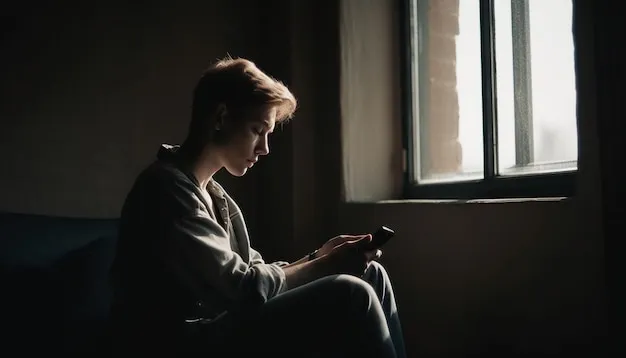
Photo: person on phone scrolling social media looking thoughtful alone, via img.freepik.com
Here's a scene you probably recognize: someone posts a photo looking happy and put-together. The comments fill up with heart emojis and "you look amazing!" What you don't see is that they spent the three days before that photo barely able to get out of bed. That the smile took effort they didn't have. That they posted it anyway because explaining the reality felt like more work than pretending.
This is the quiet, everyday performance that millions of Americans with invisible disabilities navigate on social media — and it's worth talking about a lot more than we do.
The "But You Don't Look Sick" Problem, Now in Algorithm Form
Invisible disabilities — conditions like multiple sclerosis, Crohn's disease, chronic migraine, PTSD, autism, depression, and hundreds of others — are defined in part by the fact that they don't announce themselves visually. That's both their social superpower and their greatest burden.
On one hand, passing as able-bodied or neurotypical protects people from a lot of discrimination and unwanted commentary. On the other hand, it creates a constant performance tax: the energy spent managing other people's perceptions of you, rather than just... existing.
Social media cranks that up to eleven.
Platforms like Instagram and TikTok are built around visual proof. They reward aesthetics, relatability, and a certain kind of aspirational realness that still has to look good in a thumbnail. When your disability is the kind that doesn't photograph — when your worst days look exactly like your best days from the outside — you're stuck choosing between oversharing in ways that invite skepticism, or staying silent in ways that feel like erasure.
Neither option is great. And a lot of people with invisible disabilities choose a third path: they post the good stuff and keep the rest to themselves.
The Psychological Cost of the Highlight Reel
Curating your life online when you're struggling isn't just emotionally draining — research increasingly suggests it deepens feelings of isolation and shame. When there's a persistent gap between how you present yourself and how you actually feel, that dissonance builds.
For people with chronic illness or mental health conditions, this can create a particularly cruel loop. You're already managing symptoms that are often invisible to others. Then you go online and see a world where everyone seems to be thriving — including, from the outside, you. And you start to wonder if maybe you're making it all up. If maybe you're not sick enough to say something. If the people who say "but you looked fine in that photo" are actually right.
They're not. But the algorithm doesn't know that, and it doesn't care.
Jamila, a 28-year-old in Atlanta living with lupus and anxiety, described it this way: "I have good days and I document them because they feel like victories. But then people assume that's my baseline. When I'm actually struggling, I go quiet — and nobody notices, because they're used to me being quiet. That silence isn't peace. It's me trying not to be a burden."
That word — burden — comes up a lot in conversations about invisible disability and social media. It points to something deeper than algorithm anxiety. It points to a culture that has taught disabled people, especially those whose conditions can't be seen, to minimize themselves.
What Gets Lost When We Stay Silent
When people with invisible disabilities disappear from online spaces — or only show up as their best selves — the broader cultural understanding of what disability looks like stays narrow and wrong.
We already live in a society that tends to imagine disability as a wheelchair or a white cane. The ADA symbol is a person in a chair. Disability parking placards get challenged when the person walking to their car doesn't look visibly impaired. These are symptoms of the same cultural failure: we've built a mental image of disability that excludes the vast majority of disabled people.
Social media could be a powerful corrective to that. And in pockets, it already is.
Communities on TikTok and Instagram — under hashtags like #ChronicIllness, #InvisibleDisability, and #SpoonieLife — have created genuine spaces where people share the unglamorous reality of managing conditions that the world can't see. These aren't pity parties. They're acts of radical visibility. They're people saying: this is what it actually looks like, and it's still worth showing.
Those communities matter enormously. But they exist despite the platforms, not because of them. They're carved out of algorithms that don't reward the kind of content — slow days, medical appointments, honest check-ins — that chronic illness actually involves.
Authenticity Isn't a Trend. It's a Form of Advocacy.
At Hidden Abilities, we talk a lot about visibility — because when people with hidden disabilities are seen and believed, everything gets easier. Accommodations get granted. Relationships get more honest. Policy gets written with real people in mind.
Online authenticity is part of that work. Not the performative kind that trades one highlight reel for a carefully lit "raw moment." Real authenticity — the kind that says "I'm not okay today and that's worth saying out loud" — is genuinely radical in a culture that rewards polish.
It's also, frankly, a form of advocacy. Every time someone posts honestly about what life with an invisible condition looks like, they're pushing back against the idea that disability has to be visible to be real. They're making it slightly easier for the next person to say something. They're building the kind of cultural record that eventually — slowly, imperfectly — changes how we talk about health, ability, and what it means to be human online.
You Don't Owe Anyone Your Good Days
If you have an invisible disability and you've been curating your online presence to protect yourself, that's valid. You don't owe the internet your worst moments. You don't have to perform your illness to prove it exists.
But if you've been staying silent because you're afraid nobody will believe you, or because you don't want to be seen as "too much" — we see you. Your reality is real. And there are communities, including this one, that are here for the whole story, not just the highlight reel.