Not Your Invitation to Investigate: A Field Guide for Parking Lot Confrontations
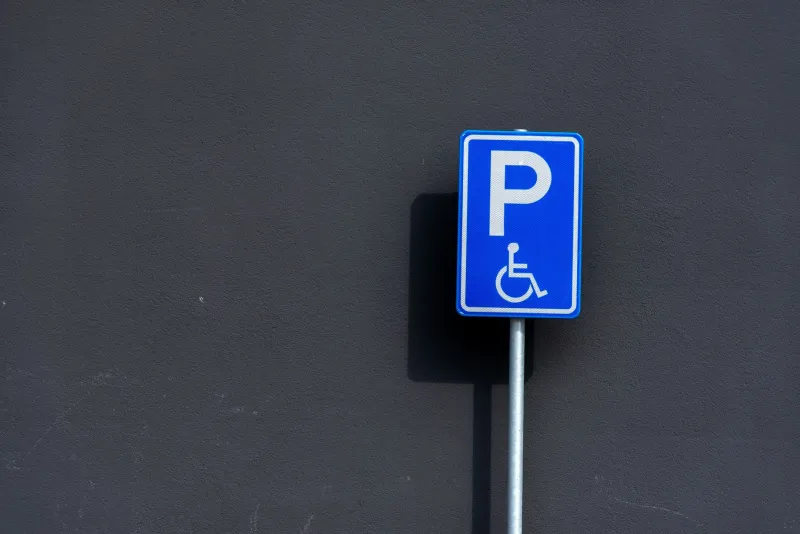
It happens in the time it takes to grab your keys. You park in an accessible spot, and before you're even out of the car, a stranger is shaking their head, taking a photo of your plate, or worse — announcing loudly to no one and everyone that you 'look fine to walk.'
If you live with a hidden disability, you've probably rehearsed this moment in your head, even if you never wanted to. Because it keeps happening. And the exhausting part isn't just the confrontation itself — it's the split-second calculation you have to make while your heart is pounding: Do I explain? Do I walk away? Do I report this?
Let's break it down, because you deserve a plan that doesn't require you to perform your disability for an audience.
First, Know What the Law Actually Says
Here's the thing most parking lot detectives don't know: there is no federal requirement that a disability be visible to use accessible parking. Under the Americans with Disabilities Act, and under every state's motor vehicle code, accessible parking placards and plates are issued through a medical and administrative process — not through a stranger's visual assessment in a Kroger parking lot.
Many conditions that qualify are invisible by nature: heart failure, chronic pain conditions, lung disease, epilepsy, POTS, autonomic disorders, prosthetics that aren't obvious, and on and on. The Department of Transportation and state DMVs already built the verification system. It involved your doctor. It involved paperwork. It did not involve the person judging you from three spaces over.
In some states, verbally harassing someone over their legitimate use of accessible parking can even rise to the level of disability-based harassment, and photographing someone in that context has raised serious privacy concerns for people with conditions like lupus or cancer who simply don't want their plates posted online. You are not the one on shaky legal ground here.
The Three-Option Framework: Educate, Ignore, Report
You don't owe every stranger a seminar. A useful way to decide in the moment is to run through three options and pick based on your energy, your safety, and the other person's tone.
Option 1: Educate (when you have the bandwidth)
If the person seems genuinely misinformed rather than hostile, a short, calm line can work:
- "Not all disabilities are visible. My placard was issued by the state — same as yours would be."
- "I have a qualifying condition. You just can't see it."
- "I'd encourage you to look up invisible disabilities. It's more common than you'd think."
Keep it under ten seconds. You are not obligated to name your diagnosis, share your medical history, or convince them. A statement, not a debate. If they push, you're allowed to end it: "I'm not discussing my health with a stranger. Have a good one."
Option 2: Ignore (when your peace comes first)
Sometimes the winning move is no move. A neutral "okay," a nod, and walking away is a complete response. This is especially true if:
- You're alone, tired, in pain, or mid-flare
- The person is filming, blocking you, or escalating
- You can feel yourself getting pulled into justifying your existence
Here's a reframe that helps: their ignorance is not an emergency you're required to resolve. Silence isn't surrender — it's triage. You're spending a limited resource (your energy) where it matters.
Option 3: Report (when it crosses a line)
If someone blocks your path, follows you, touches you or your vehicle, films you aggressively, or you feel unsafe, that's no longer a rude comment — that's potentially harassment or intimidation, and you have options:
- Store management or security: Businesses with accessible parking are responsible for its enforcement and general safety. Asking a manager to walk out with you is reasonable and often effective.
- Non-emergency police line: If someone is refusing to let you leave or photographing you against your wishes, this qualifies.
- Documentation: Note the date, time, location, and what happened. If this person is a repeat 'volunteer enforcer' at your local store, a pattern matters.
You should never have to choose between your safety and your errand.
Scripts for the Moments That Catch You Off Guard
Because in the moment, your brain rarely cooperates. Borrow these:
The plate-photo scenario: "Taking photos of strangers' cars in parking lots is a weird hobby, and mine is a legal placard. Please delete that."
The loud announcement scenario: (said calmly, at normal volume) "Not all disabilities are visible. I hope you never have to learn that firsthand."
The follow-you-inside scenario: Disengage completely and alert an employee. Someone following you to 'catch' you has left disagreement behind and entered stalking behavior.
The guilt-trip scenario: "There are more accessible spots being used by people who need them than you'd ever guess. That's the system working, not failing."
Notice what's missing from all of these: apology, over-explanation, proof. You don't have to make a stranger comfortable with what they can't see.
Protect the Ability, Not Just the Parking Spot
One more thing, because it matters: these encounters add up. Research on discrimination and chronic illness consistently shows that microaggressions and repeated vigilance take a real toll — on stress levels, on mental health, on whether people even feel safe going out. Being challenged in a parking lot isn't a small thing when it's the fourth time this month.
So build your own protocol ahead of time. Decide your default (some people default to ignore, others to a single scripted line). Tell the people in your life what support looks like if they witness it. And if an encounter shakes you, treat that as legitimate — talk it through with a friend, a therapist, or a community that gets it.
And if you're someone who's never needed an accessible spot? Here's your assignment: the next time you see someone get the side-eye for parking where they're allowed to park, be the person who says, "Not all disabilities are visible." Because the system only works when we stop deputizing each other.
Your placard is valid. Your needs are real. And no one — not a stranger, not a camera, not a comment — gets to audit what they can't see.